
2026-08-05
Competition software works. Event operations still run like it's 2005.
Sport platforms like Equipe or Equestrian Digital have solved competition management. But everything that actually makes the event run — production, sponsors, vendors, staff, communications — still lives in WhatsApp, Excel, and email threads. That's the real unsolved problem.
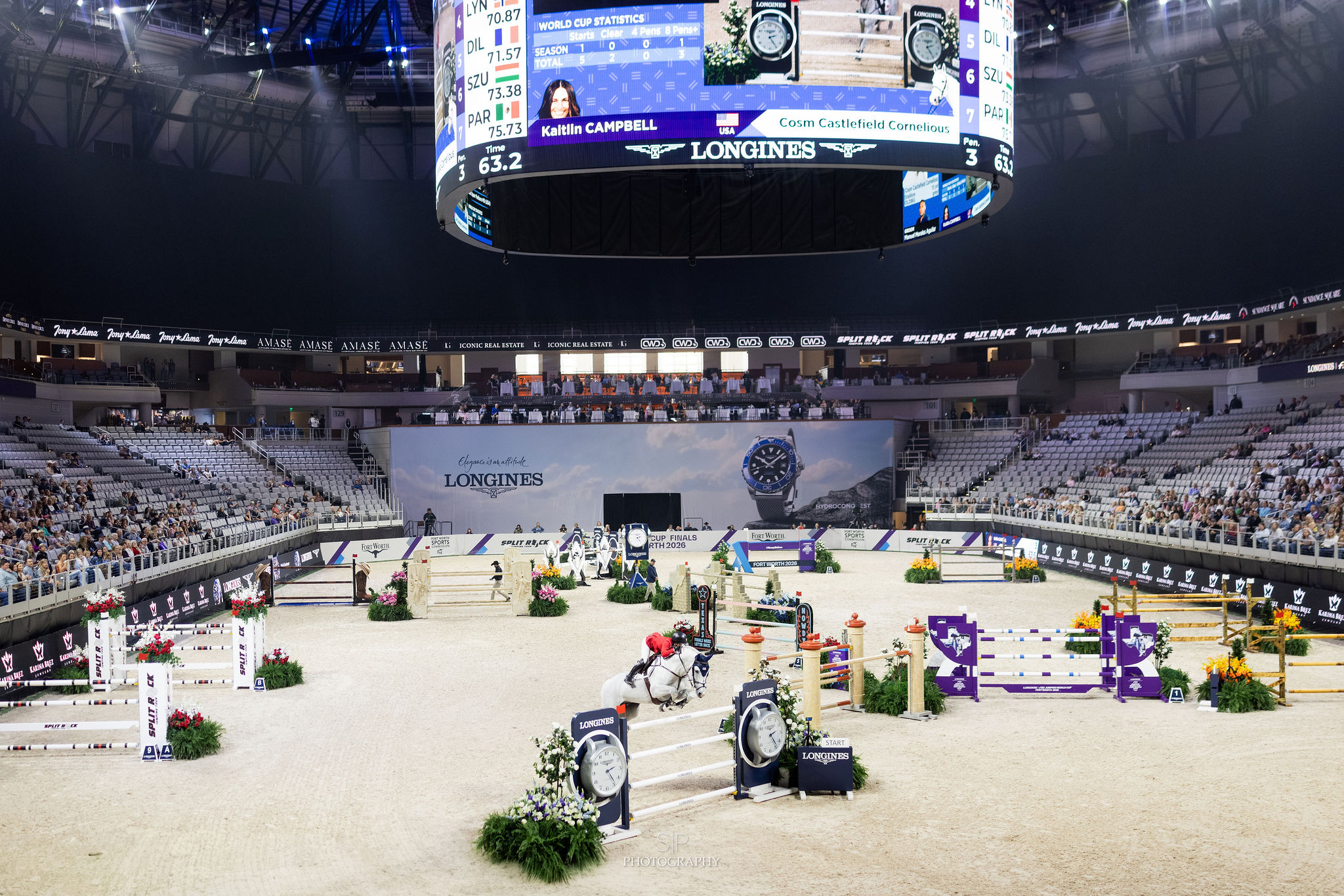
The problem no one talks about at major equestrian shows
If you organize or run a large-scale equestrian show, you're probably already using a platform like Equipe or Equestrian Digital. Entries, schedules, results, rankings, competitor communications — all of it works. It works well. That problem is solved.
But there's another problem no one has solved yet. And it's the one that eats the most hours, generates the most errors, and puts your event's reputation at risk every single year.
It doesn't happen during the competition. It happens before it starts. And it happens again once it's over.
It's event operations.
Two realities living inside the same show
At any major equestrian show today, two completely different worlds coexist.
The first is digitized: sport management. There's software, there's data, there's traceability. The judge has what they need. The rider receives their start number. Results go live in real time.
The second still runs exactly as it did twenty years ago: operational management. And this is where the real chaos lives.
The production team coordinates over WhatsApp. Sponsors receive email updates — when someone remembers to send them. Vendors are working from different versions of the same document. The communications manager doesn't know what the content team has confirmed. The event director is making decisions without full visibility into what's actually happening.
Every department operates in its own silo. There's no single source of truth. And the outcome is predictable: duplicated tasks, missed commitments, late decisions, and operational pressure that builds until it peaks on event day.
Why this happens — and why it matters more than it seems
The root cause is structural, not human. The teams running equestrian shows are professionals. They know what they're doing. But they're working with tools that were never designed to coordinate complex, multi-department operations.
WhatsApp has no institutional memory. Excel doesn't alert you when someone changes a critical figure. Email doesn't connect tasks to owners or deadlines. And none of these tools talk to each other.
The result is what operational management calls scattered information: the data exists, but it's distributed across multiple tools, documents, and people. No one has the full picture. And when no one has the full picture, mistakes are inevitable.
For a high-level equestrian show, the consequences are concrete and costly:
- Dissatisfied sponsors because agreed deliverables aren't executed on time or properly documented.
- Vendors arriving with the wrong information because they were working from an outdated version of the brief.
- Staff who don't know exactly what to do or when, because shifts and instructions came through three different channels.
- Decisions that come too late because the event director has no real-time visibility into what's happening across each area.
- Hundreds of hours lost to coordination meetings, follow-up calls, and confirmation emails that could be automated.
And all of this while the sport platform runs flawlessly. The paradox is real: the competition software is in the twenty-first century. Event operations are still in 2005.
The solution isn't replacing what works. It's building what's missing.
No one needs to replace Equipe or Equestrian Digital. Those platforms do their job well and your teams already know them. What's missing is a different layer entirely: a platform built specifically to manage event operations — not the competition.
What some are already calling an Event Operations OS: a central system that connects every department, consolidates information, and automates coordination.
In practice, that means having in one single place:
- Production management and a complete event timeline, with real-time visibility across all areas.
- Vendor and exhibitor coordination, with single-source documents, automatic confirmations, and deliverable tracking.
- Sponsor management, with commitment records, deadline alerts, and automatic activation reports.
- Staff planning and shift scheduling, with task assignments, notifications, and confirmations.
- Communications and content coordination, covering campaigns, photographers, video, and streaming, with integrated approval workflows.
- Incident management, with traceable logging, assignment, and resolution.
- Executive dashboard with real-time KPIs, so the event director makes decisions with complete information.
- Automation and AI for task follow-up, content generation, and proactive department-level alerts.
This isn't a generic project management tool. It's a platform built around the operational reality of an equestrian show — its timelines, its stakeholders, its workflows, and its specific dependencies.
What changes when operations are connected
When an equestrian event organization works with a centralized operating system, the shift isn't just technological. It's strategic.
The event director stops being the bottleneck through whom all information flows. Departments stop relying on WhatsApp to coordinate. Sponsors receive a professional, documented experience. Vendors always work from the correct version of every document. And the team arrives on event day having dramatically reduced the operational pressure of the weeks before.
The show doesn't just run better. It feels better. And that has a direct impact on sponsor renewals, competitor loyalty, and the event's long-term reputation.
This same logic of centralization and operational traceability applies across other areas of the equestrian industry. Those who manage professional horse transport, for example, know that coordinating logistics without the right tools creates exactly the same problems: scattered information, conflicting versions, and decisions that come too late. Purpose-built technology solves that pattern in any complex operation.
Two different problems. Two different solutions.
The equestrian industry has done an excellent job of digitizing competition management. But it has mistaken that progress for having solved the event's technology challenge in full.
Managing the competition and managing the event are two entirely different problems. The first has a solution. The second still doesn't.
And solving the second — building the operational layer that doesn't yet exist — can mean hundreds of hours saved per edition, a significant reduction in errors, a dramatically better experience for sponsors, vendors, and teams, and a genuine competitive advantage over other shows on the circuit.
Technology isn't the starting point. It's the result of understanding the problem clearly. And in this case, the problem is perfectly defined.
Interested in seeing how this type of platform plays out in other parts of the industry? At Equestrian Partners, we've also looked at how the lack of integration affects organizations running online equestrian auctions and those working with sensor data at equestrian facilities without putting it to operational use. The pattern is always the same: the information exists, but it isn't connected.
Frequently asked questions
If your event already uses platforms like Equipe or Equestrian Digital, you've likely got the sport side covered. The next competitive advantage lies in connecting all the operations that happen around the competition itself. At Equestrian Partners, we design and build this type of custom platform, tailored to the way each organization actually works. Book a strategy session and we'll take a close look at where your operation is costing more than it should.
Book a free strategy session